
Sacroiliac joint pain can be excruciating, especially when bending over or standing up, something we do numerous times each day. Moreover, chronic pain in the sacroiliac joints indicates a misalignment of the pelvic girdle (pelvis), as these joints are an integral part of the pelvic girdle. Such a misalignment may lead to pain and deterioration of the hip and knee joints as well because of uneven weight bearing caused by this misalignment.
The bones of the pelvic girdle are held together by connective tissue.
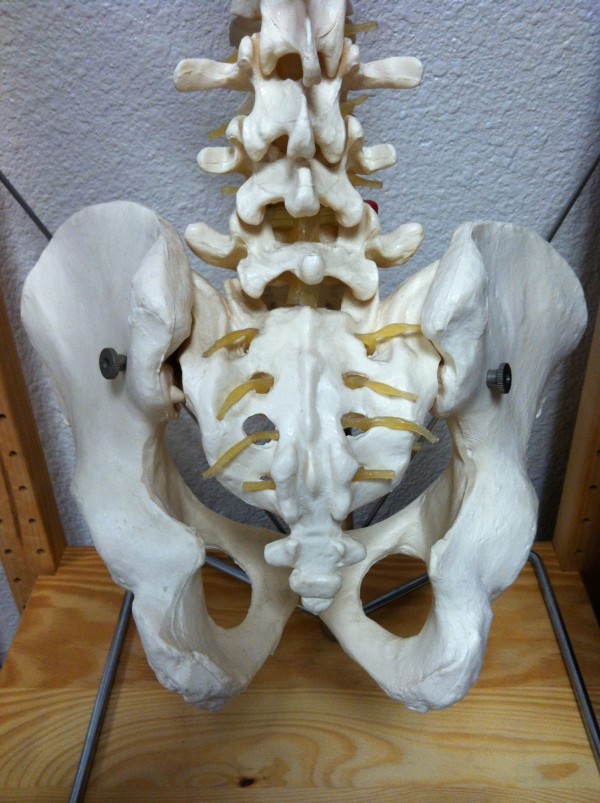
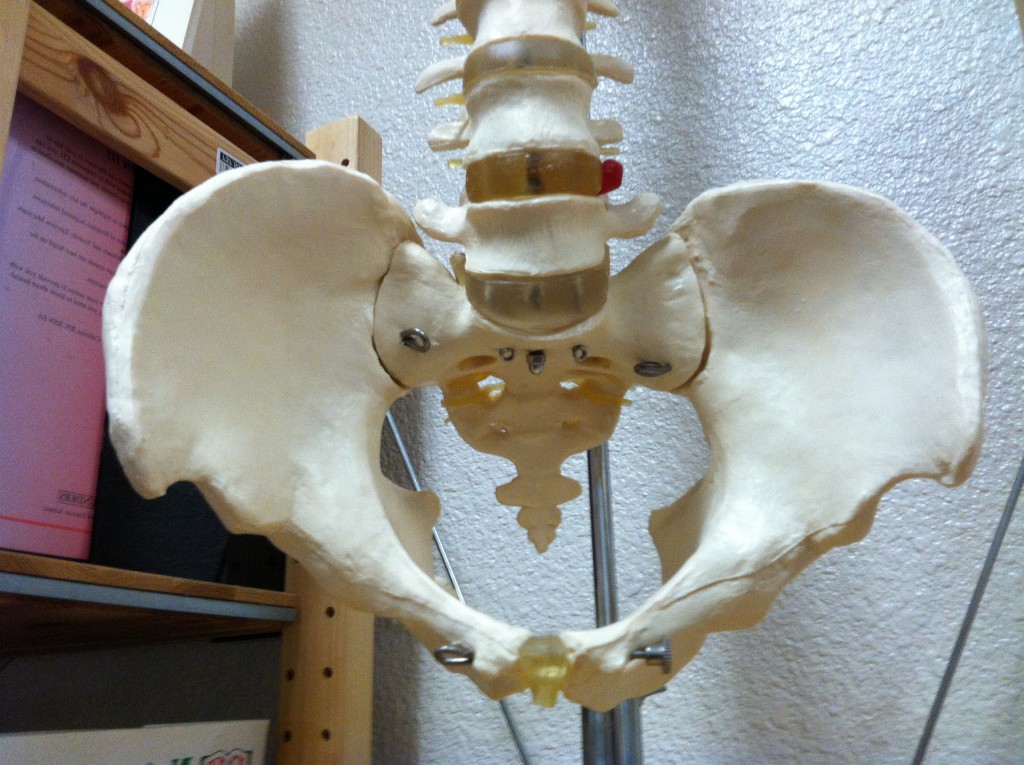 The pelvic girdle consists of the two hip bones, that are connected in the back by the sacrum and at the front by the pubic symphysis. Each hip bone has three parts: the ilium (commonly referred to as the hip and looks like an elephant ear), the ischium (seat bones), and the pubis in the front.
The two ilia connect with the sacrum via a joint on either side of the sacrum, called the sacroiliac joint. In the front they connect at their pubic ends via a fibrous joint, the pubic symphysis.
The entire girdle is held together by lots of connective tissue in the form of ligaments primarily, and stabilized by the balanced actions of the muscles of the trunk as well as the buttock and thigh muscles.
These muscles act on the pelvis via their tendons which attach primarily to the pelvic rim (the rounded edge of the hip bones), sacrum, seat bones (ischial tuberosities), and pubic bones.
The pelvic girdle consists of the two hip bones, that are connected in the back by the sacrum and at the front by the pubic symphysis. Each hip bone has three parts: the ilium (commonly referred to as the hip and looks like an elephant ear), the ischium (seat bones), and the pubis in the front.
The two ilia connect with the sacrum via a joint on either side of the sacrum, called the sacroiliac joint. In the front they connect at their pubic ends via a fibrous joint, the pubic symphysis.
The entire girdle is held together by lots of connective tissue in the form of ligaments primarily, and stabilized by the balanced actions of the muscles of the trunk as well as the buttock and thigh muscles.
These muscles act on the pelvis via their tendons which attach primarily to the pelvic rim (the rounded edge of the hip bones), sacrum, seat bones (ischial tuberosities), and pubic bones.
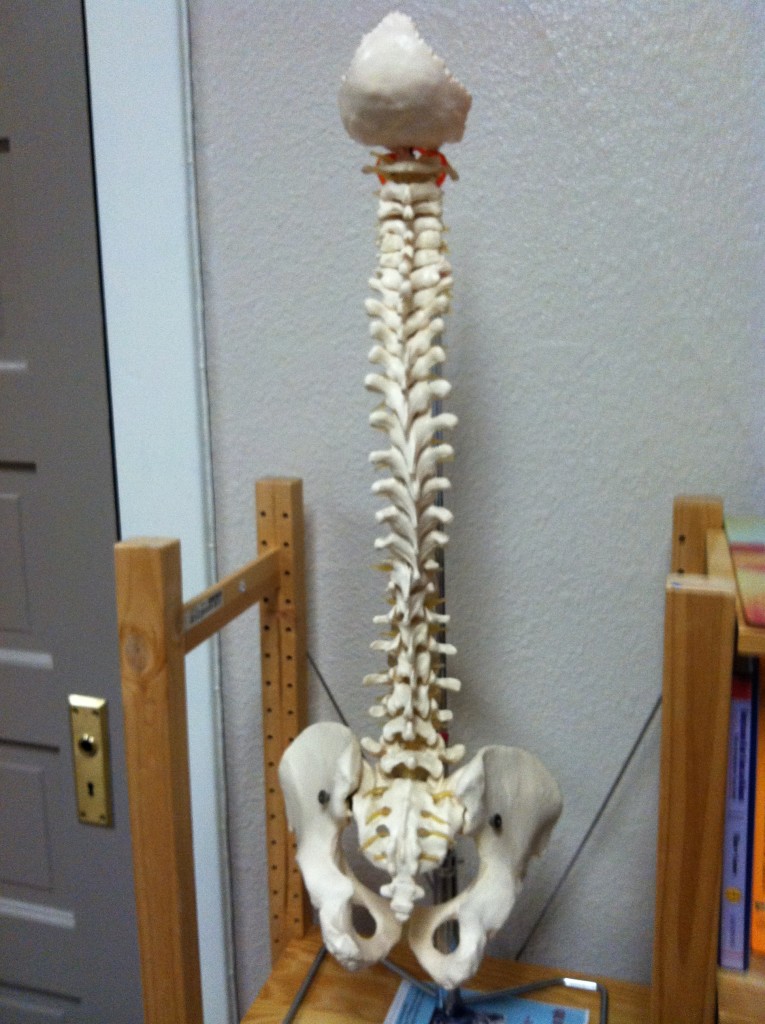
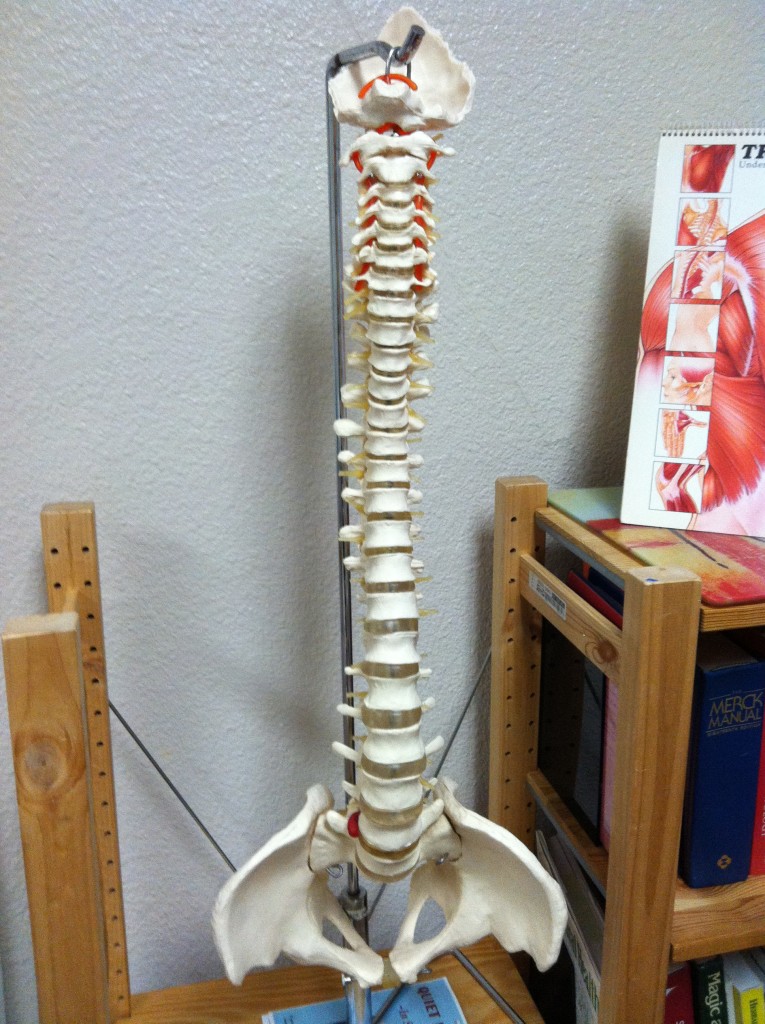
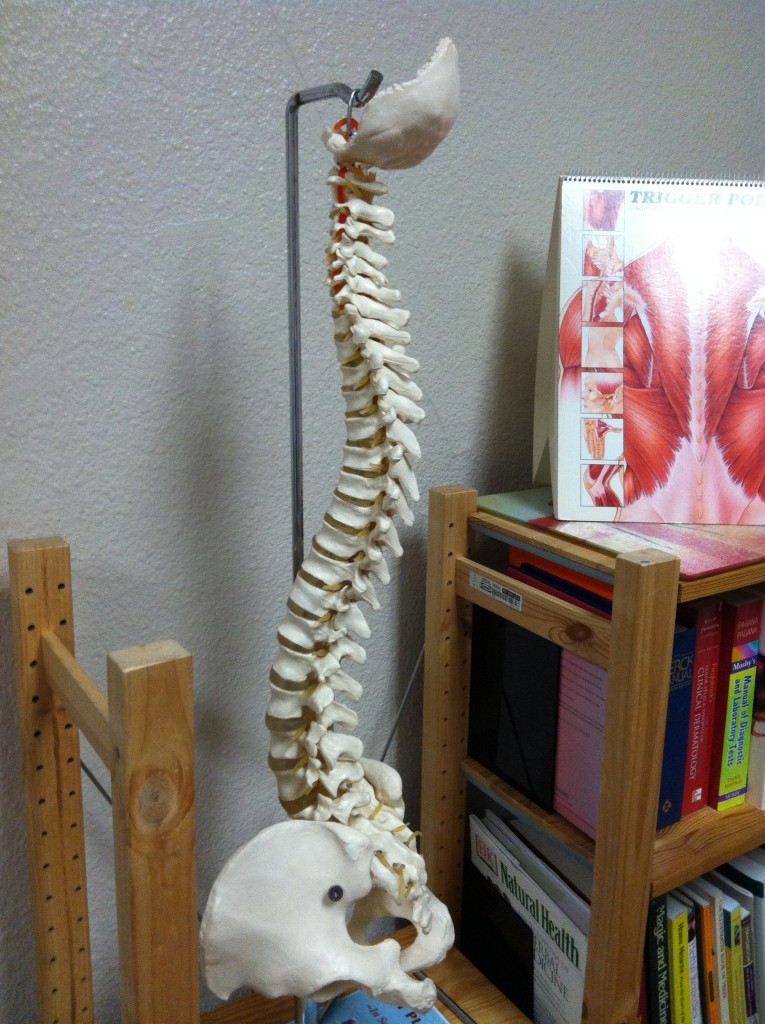 The sacrum at the bottom of the spine is a pivotal bone in our body as it forms the center piece of the pelvic girdle. Its ability to rock forward and backward, wiggle from side to side, and do a figure eight motion, allows us to bend forward and down, get back up, walk, run, dance, jump, and move through space with grace and ease.
Connective tissue (ligaments, tendons, fascia) restrictions cause pelvic misalignment and put a damper on all these motions and our enjoyment of life as well.
The sacrum at the bottom of the spine is a pivotal bone in our body as it forms the center piece of the pelvic girdle. Its ability to rock forward and backward, wiggle from side to side, and do a figure eight motion, allows us to bend forward and down, get back up, walk, run, dance, jump, and move through space with grace and ease.
Connective tissue (ligaments, tendons, fascia) restrictions cause pelvic misalignment and put a damper on all these motions and our enjoyment of life as well.
How does the pelvic girdle become misaligned?
Trauma to the spine, pelvis, or legs creates distortion in the fascia, ligaments and tendons of the pelvis resulting in misalignment to the pelvic girdle. Since the sacrum is the center piece in this girdle, it often becomes tilted and locked up. Inflammation at first, and chronic pain in the long run, are often the result. Below are a few examples of how the pelvic girdle can become misaligned and the sacrum locked up around the sacroiliac joints which connect it with the big hip bones (ilia).- The strains of pregnancy and labor may lead to a misalignment of the pelvis with low back and sacroiliac joint pain after birth, becoming potentially a life long issue. During pregnancy, a woman's body releases a hormone called relaxin, which allows the pelvic ligaments to soften in order to accommodate the baby's rapid growth during the third trimester, and to permit the baby's passage through the birth canal. Prolonged and difficult labor may cause distortion to these ligaments leading to chronic low back and sacroiliac pain.
- Direct trauma to the spine or pelvis, scoliosis, whiplash injuries, abdominal surgery, or hamstring injuries may cause misalignment of the sacroiliac joints either immediately, or several weeks, months, or even years later.
- Many sports involve twisting motions of the body creating a torque on the spine and pelvic girdle. Good examples are gymnastics, golf, swinging a baseball bat, pitching, figure or ice skating, basketball, football, tennis, volleyball, skiing, skateboarding, and many more.
- Seemingly benign activities such as playing a musical instrument that requires asymmetric use of the body or a lot of sitting may put a similar strain on the pelvic girdle. Even just having to hold the instrument for an extended amount of time puts quite a strain on the back and pelvic girdle.